What is well water? Differences from tap water and inspection/disinfection [Basic Knowledge]
Even with the same groundwater, the extent to which tap water and well water are verified differs depending on who is responsible. This explains the realities of the water sources and the differences in responsibilities and costs for testing and disinfection.
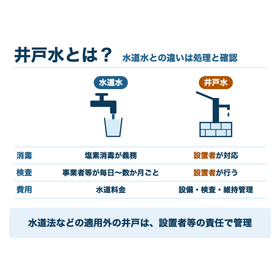
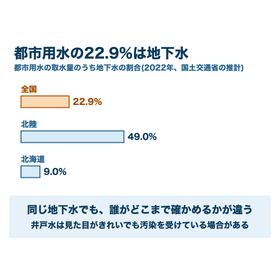
Well water refers to water that is drawn from underground through a well dug into the ground. It is used in homes, factories, and stores for various purposes, including drinking water, irrigation, and cleaning. ■ Is tap water also sourced from groundwater? Of the total water intake for urban use, which includes both domestic and industrial water, 22.9% nationwide comes from groundwater (2022). In the Hokuriku region, this figure is 49.0%, while in Hokkaido, it is 9.0%, indicating regional differences. Even at the prefectural level, in Yamanashi Prefecture, 40.7% of the water intake for public water supply in fiscal year 2022 came from deep wells, while in Okayama Prefecture, 26.4% of the water source for tap water in fiscal year 2024 was groundwater. ■ So what is the difference? Unlike tap water, well water does not have verifiable sources or pathways. It is not subjected to purification treatment, chlorine disinfection, or water quality testing. The main difference lies in the treatment and verification processes rather than the source of the water. ■ Options for uses other than drinking For these reasons, some municipalities advise against using well water for drinking and recommend its use for non-potable purposes such as irrigation. The necessary management changes depending on whether the water is intended for drinking or other uses. Please feel free to consult with us first.
- Company:トリイ
- Price:Other